
Palworld Québec & France
A website that drives two live game servers in real time.
Community platform and admin panel for two dedicated game servers. Accounts, currency, a player marketplace, payments, an interactive map and monitoring — all wired into the servers themselves.
The starting point
A French-speaking gaming community runs two dedicated game servers. At first everything is handled by hand: commands typed into a console, rewards handed out by eye, trades between players agreed on Discord and then honoured on trust.
That works at twenty players. Past that, it eats hours every week and mistakes become inevitable — an item delivered twice, a reward forgotten, a trade disputed with no record of it.
What the platform had to do
One place where players manage their account, buy, trade with each other and follow their progress. And, on the admin side, see what is happening on the servers without opening a terminal.
With one constraint that shaped everything: part of the community plays on console and cannot install anything. So it all had to work without ever asking the player to do a thing. That limit ruled out the easy answers and forced sturdier ones.
What was built
The system consists of three applications. The website, which players see. An API, holding the rules, the data and the payments. And an agent installed on the game server's own machine, which monitors its logs, reports events and carries out incoming commands.
On top of that sit modules written in Lua and loaded directly into the game, for what the game doesn't offer: delivering an item bought on the site, preventing an attack launched from a safe zone, locking a creature's stats.
A Discord bot closes the loop. Site chat and Discord chat are linked both ways, and a command typed in Discord can broadcast an announcement in game. Three environments, one system.
Why this is more than a website
A brochure site displays information. Here, every action has an effect in an outside system: a purchase makes the item appear in the player's inventory, in game, seconds later. That is exactly the shape of a business tool wired into existing software.
The trickiest part is the economy. As soon as a system credits currency and delivers items, it has to survive double clicks, disconnections at the worst moment and concurrent calls. The rule applied everywhere: reserve first, deliver second, never the other way around. A gap between a balance and its ledger always surfaces eventually.
And it runs unattended: scheduled jobs, backups, restarts. A platform in production teaches things no delivered-and-forgotten project does — chief among them that most outages come from what runs on its own, at night, when nobody is watching.
Screenshots
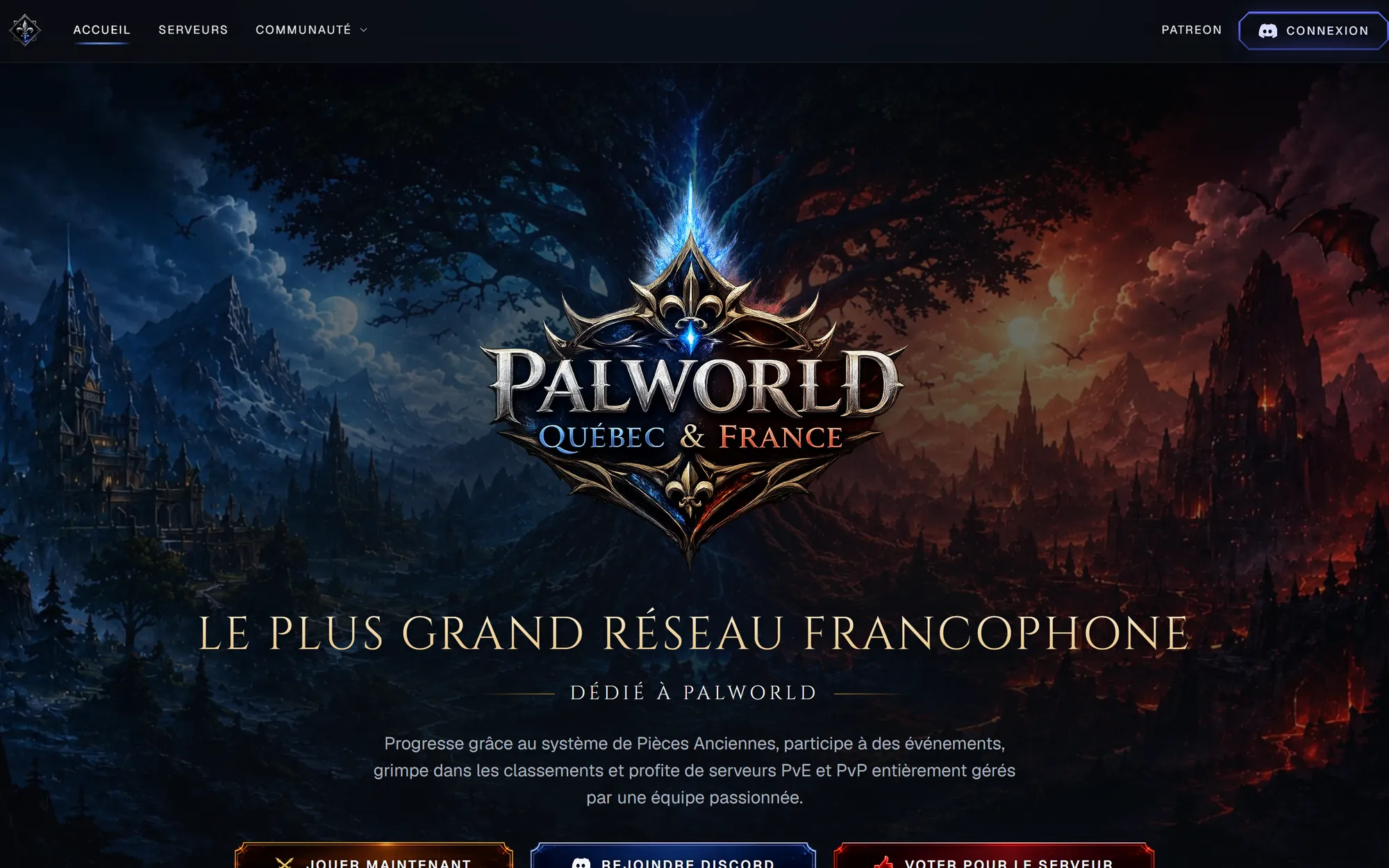
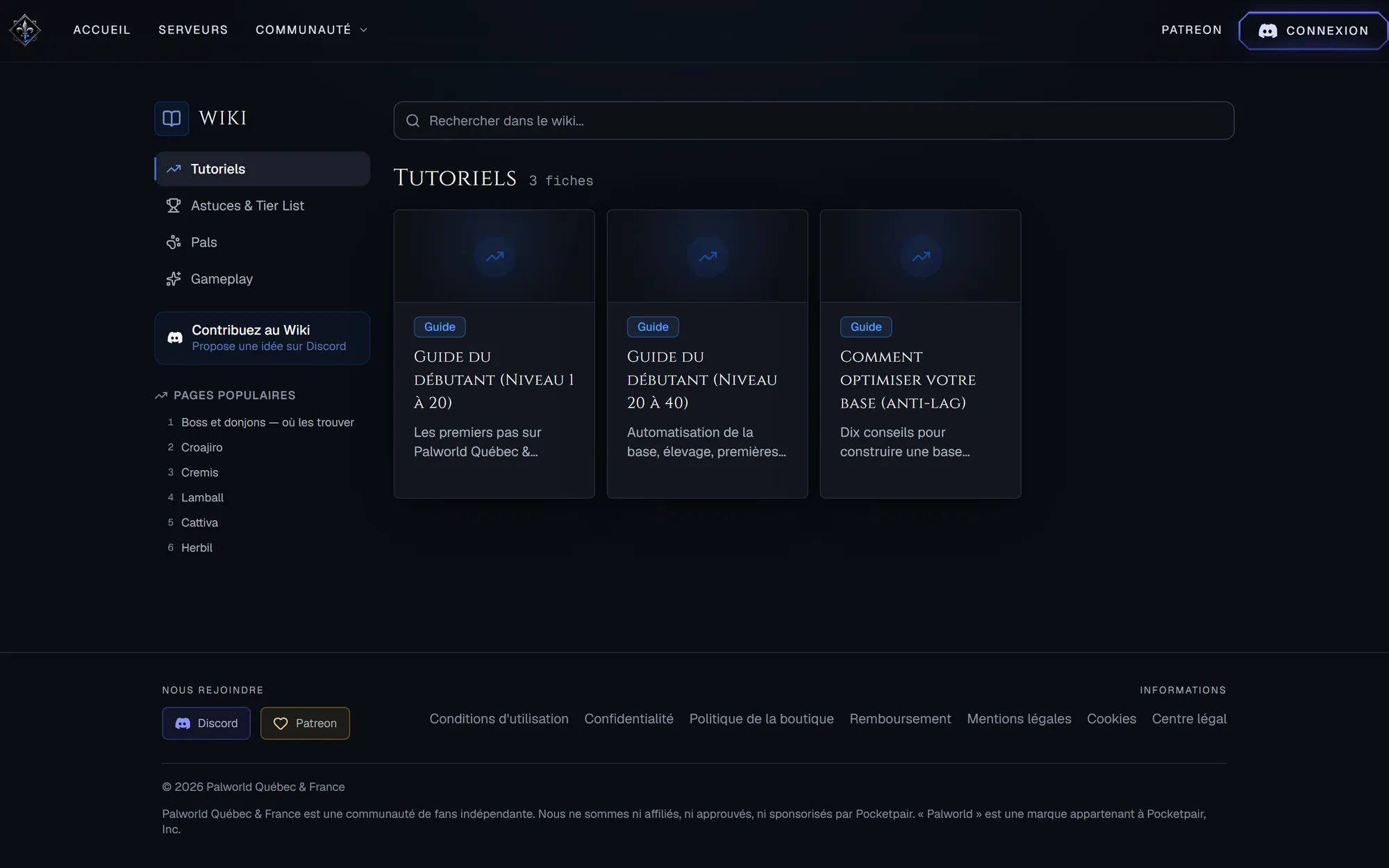
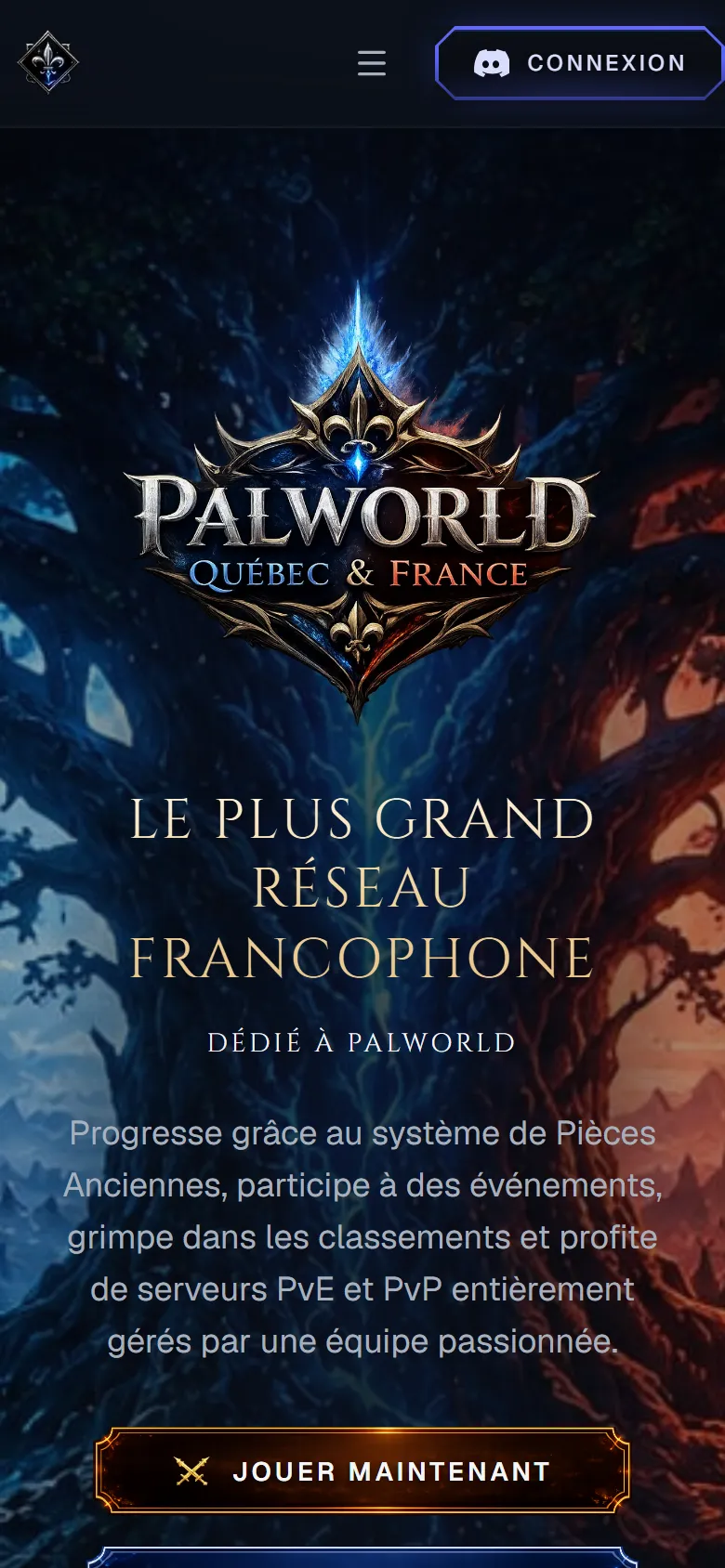
What's inside
- Player accounts, roles and permissions, linked to Discord
- Currency, shop and player-to-player marketplace, with a transaction ledger
- Real payments, with the purchase delivered into the game automatically
- Interactive world map, rebuilt from the game's own tiles
- Leaderboards, voting, events and automated rewards
- Admin panel: server status, connected players, moderation
- Live chat, bridged with Discord in both directions
- A French wiki of nearly 300 pages
- Ongoing upkeep: scheduled restarts, daily backups