01
Websites and web apps
From the landing page that has to convert, to the business app with accounts, roles and data.
- Marketing sites
- Business apps
- Accounts and roles
- Payments

Independent developer · Quebec
I'm Mikael Bergeron. Websites, web apps, dashboards, automations — custom-built, start to finish. You deal directly with the person writing the code.
Features included, total price, deliverables, timeline and external costs. In writing, before the first dollar.
One contact, the one who builds it. No handoffs, no account manager in between.
On final payment, the code written for your project is handed over with every access, and hosting accounts are in your name. Third-party components stay under their own licences.
Reproducible bugs tied to what was delivered are fixed free of charge for 30 days.
Four areas I work in. Most real projects combine two or three.
From the landing page that has to convert, to the business app with accounts, roles and data.
See what is actually happening in your business instead of guessing from a spreadsheet.
Repetitive tasks cost time and add nothing. They can be scripted.
AI applied to a specific, measurable problem — not a chatbot bolted onto a site to look modern.
New features, modernization, fixes, optimization, picking up work someone left unfinished. I start by reading the existing code and telling you what I find — including when the answer is that starting over is cheaper.
One platform genuinely in production, and three concept demonstrations built end to end.
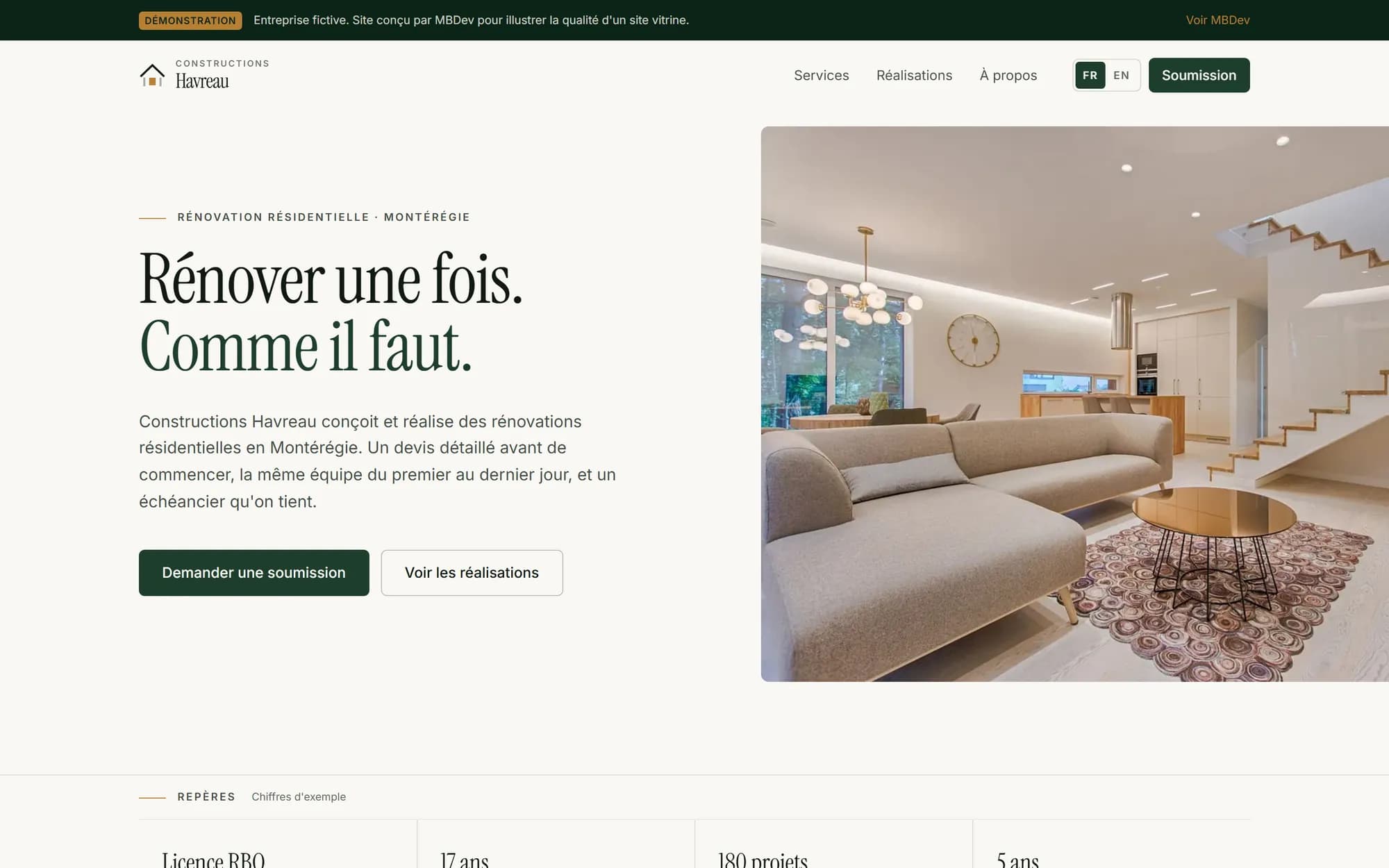
A complete marketing site for a company that doesn't exist.
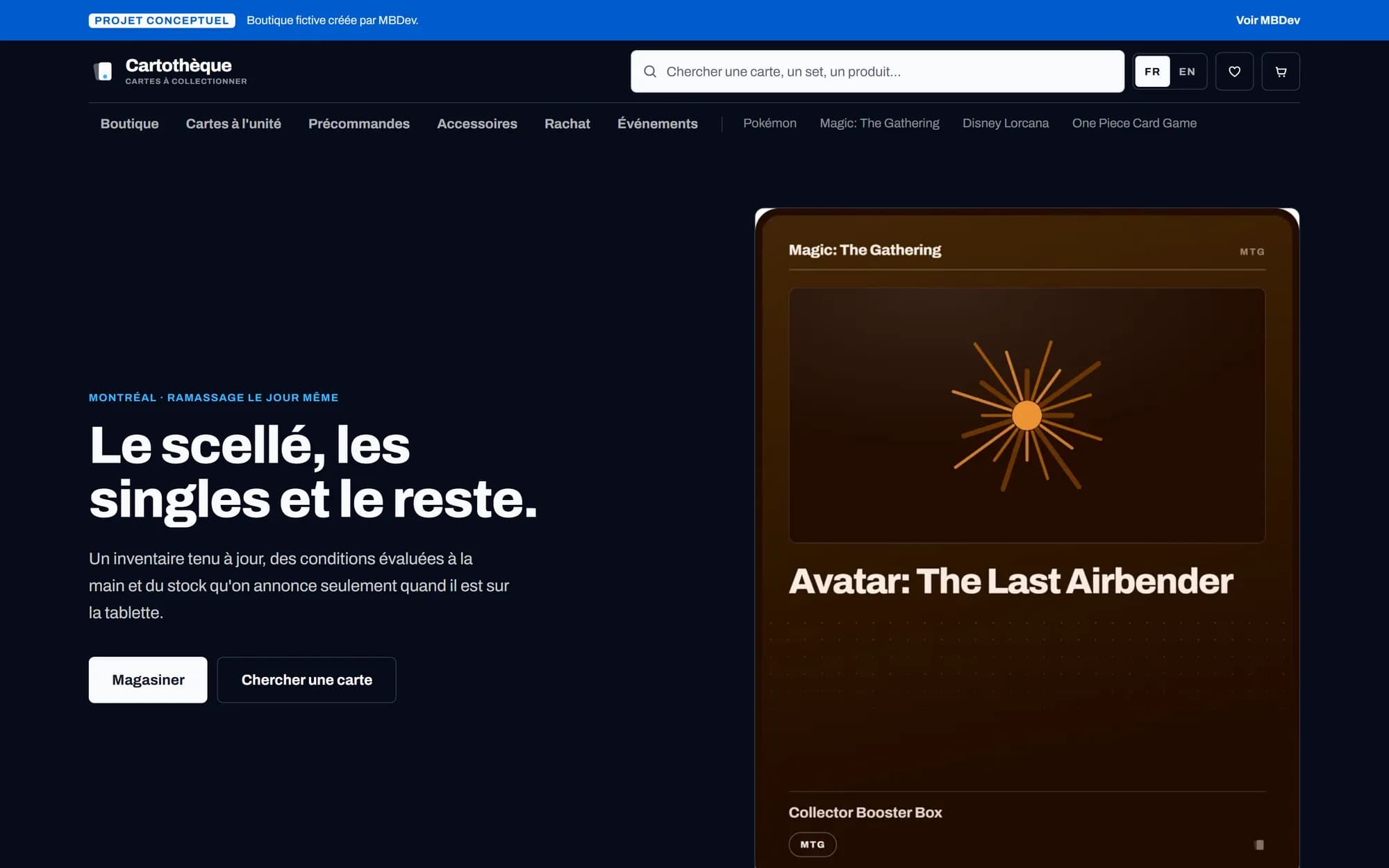
A complete online store, from catalogue to checkout.
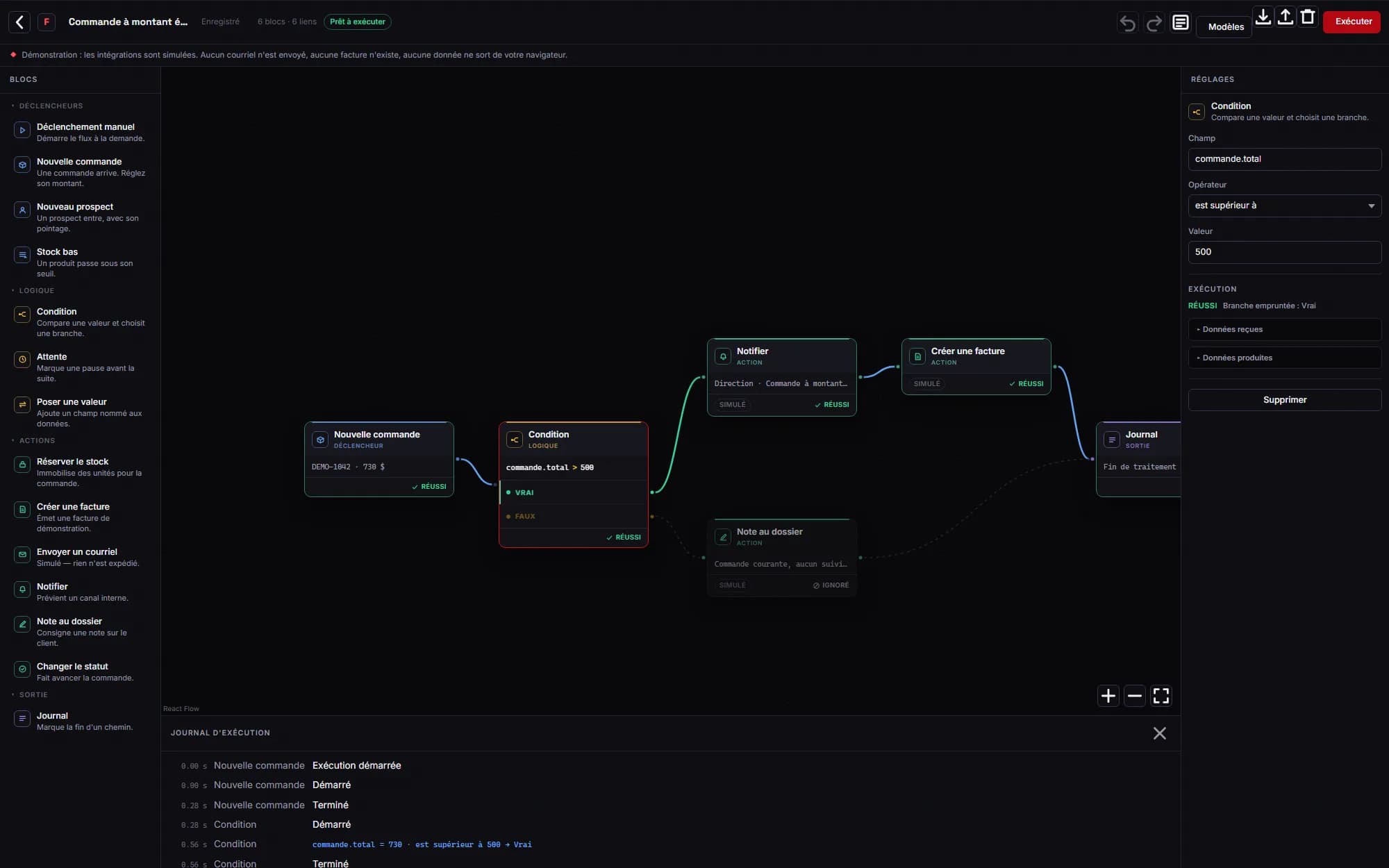
An automation editor whose graph genuinely executes.
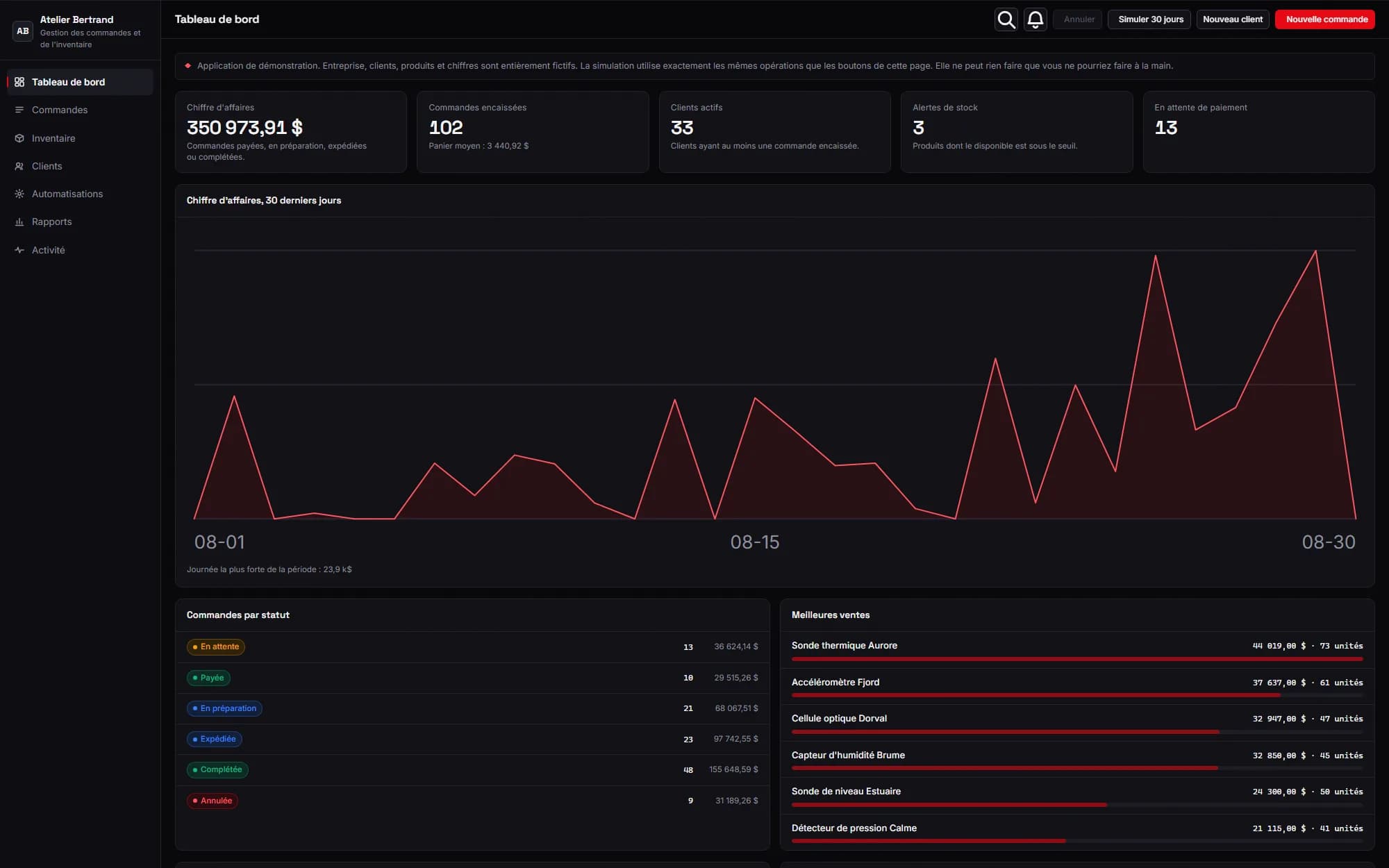
Operations software that genuinely runs, in your tab.

A website that drives two live game servers in real time.
Every project shown here was actually built and can be visited at the address given. An entry marked “concept project” means the company was invented for the demonstration — the site itself exists and really runs.
Four stages, from the first call to going live. I don't jump straight into code: most projects that go off the rails don't have a technical problem, they have a poorly defined scope.
You explain the problem — no spec document needed. I ask the questions that are missing and flag what's risky before it gets expensive.
Your idea · Analysis
Written scope, fixed price, timeline and third-party costs. You know what you're buying before the first dollar, and you see something early enough to change direction while it's still cheap.
Quote · Prototype
Built in stages: you follow the progress instead of waiting in the dark. Browsers, mobile, edge cases and errors get tested on my side, not on your customers.
Development · Testing
Launch, handover of every access, and a walkthrough. The code and the accounts are yours, and reproducible bugs are fixed free for 30 days.
Launch · 30-day warranty
A poorly defined scope, an impossible deadline, or a need an existing tool solves better and cheaper: I'd rather say so at quoting time. It's less pleasant than saying yes, and far less expensive for everyone.
Boring, documented, maintainable choices — so the next developer who opens the project, me or someone else, finds their way around.
It speeds up analysis and testing. The decisions and the responsibility for the result stay mine: you're buying a solution that works, and someone who answers when it doesn't.
This terminal actually runs in your browser. Type “help” or choose a command to explore it.
MBDEVTERMINAL
Entirely dependent on what needs building. I don't publish a price list, because "a website" can mean three pages or a full application. Describe your project and you'll get a precise estimate, free and with no obligation.
A small job is measured in days, a full project in weeks, a platform in months. The timeline is fixed in the quote before work starts. It also depends on you: projects slip when content and access arrive late.
You get in touch, we talk, and I send you a written summary with the price and the timeline. If you accept it, a 50% deposit starts development. The balance is due at the end, before the final go-live.
You do, on full final payment: the code written for your project is assigned to you, along with the source and every access. The third-party libraries and components it uses stay under their own licences, as in any software. No arrangement where I keep the keys to keep you dependent.
You do, on your own accounts, in your name. I can create and configure them for you, but they belong to you. It's cleaner: if we ever part ways, your site doesn't leave with me.
Yes, like most developers today. It speeds up certain steps. It doesn't replace the architecture, the review, or the responsibility for what gets delivered — those stay mine.
A 30-day warranty covers reproducible bugs tied to what was delivered. After that, either you take over, or we set up monthly maintenance. It's an option, never an obligation.
Yes. The work is remote anyway. Quebec is where I start, not where I stop.
Let's talk
A few minutes is all it takes. Even if the idea isn't clear yet — that's exactly the moment when one good question saves the most time.